.svg)
Build the roadmap on evidence, and close every item with a number.
See the journey behind every metric, rank friction by revenue impact, and prove what each release changed.






Who builds their product decisions on FullSession?
Product and UX teams from product-led startups to enterprise platforms with long release cycles, using it to replace debate with evidence before a sprint is scoped.
Product managers
See where onboarding flows succeed or fail, understand which actions define activation, and ship changes that move the metric you actually own.
Heads of Product
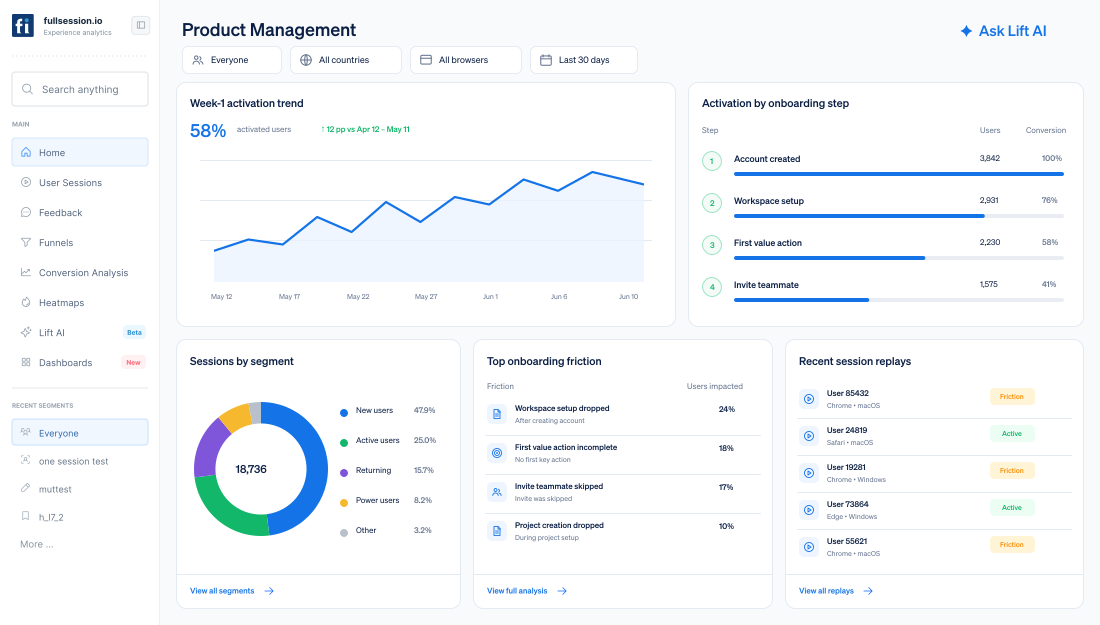
Get a clear view of Week-1 activation across products and segments so you can align teams around the same activation and retention goals.
Product analytics leaders
Combine quantitative product metrics with replays, heatmaps, and funnels so you can answer deeper questions without instrumenting every field.
Growth product managers
Use real behavior patterns to design and prioritize activation experiments instead of guessing which changes might work.
Why the backlog keeps getting built on opinions
When a metric drops without session evidence, roadmap priority becomes an opinion contest—and even good releases end as unprovable claims.
.avif)
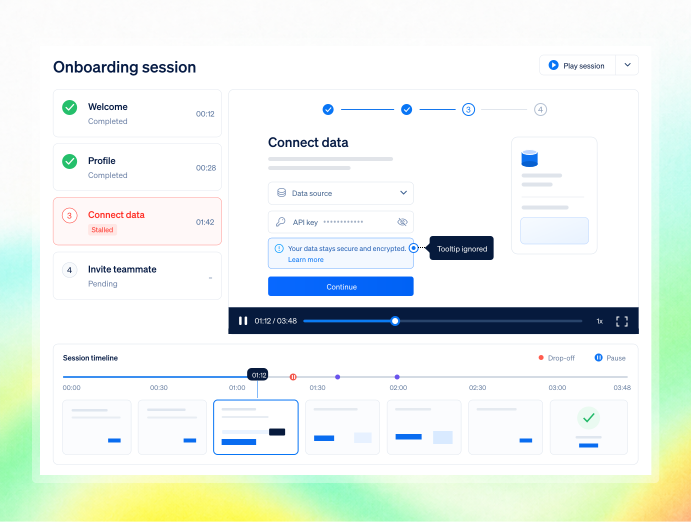
Expand the metric into sessions
Open the journeys behind the drop to see where users stalled and what they experienced.
.avif)
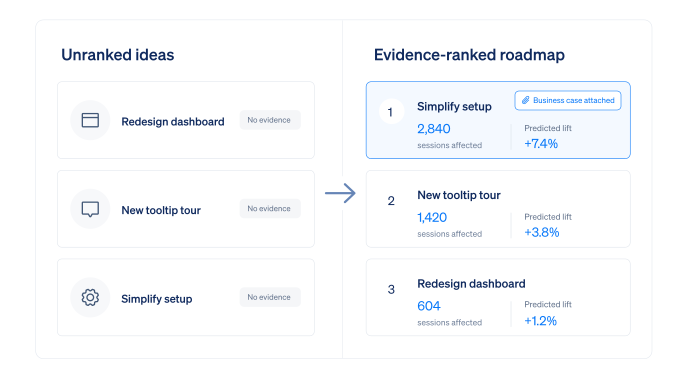
Rank causes before scoping
Replace the loudest request with evidence, affected users, and predicted impact.
.avif)
Close every release with a result
Measure movement against baseline so every backlog item ends with proof, not intent.
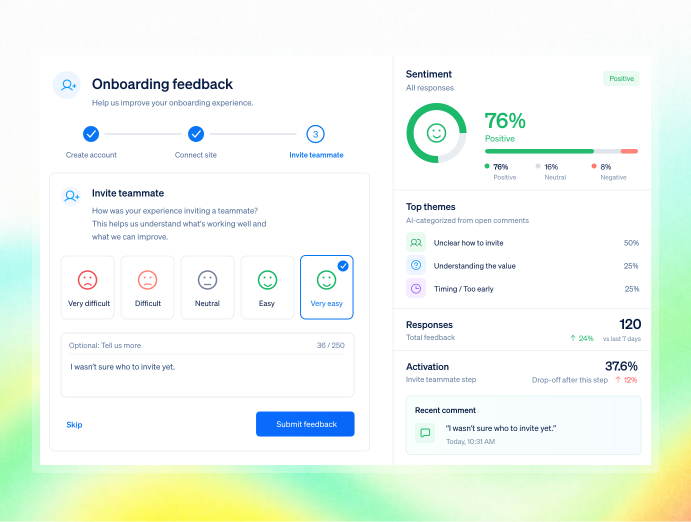
See why new users stall
Combine replays, heatmaps, and feedback to pinpoint onboarding friction and improve activation with confidence.
Use session replay to see how new users explore your product: where they pause, which tooltips or steps they ignore, and where they drop off entirely.
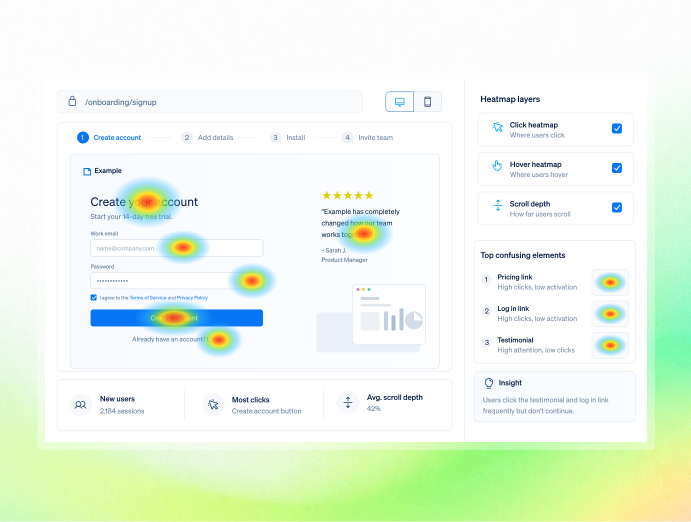
Use heatmaps to see where new users click, hover, and scroll on key onboarding screens, revealing elements that attract attention but don’t drive activation.
Collect feedback and micro-surveys directly from onboarding flows so you can combine qualitative input with behavior and funnel metrics.

What a product team gets
An evidence-backed roadmap, the journey behind every metric, and an after-ship number for every fix—commonly around +10% on the metric targeted.

Defend the backlog with evidence
Prioritize by user impact rather than seniority or the latest escalation.

Share one replay across teams
End the screenshot relay with one session link design and engineering can inspect together.
.webp)
Commit with predicted impact
Put a predicted-impact figure on the spec before reserving roadmap capacity.
.webp)
Close the loop after ship
Measure against baseline and attach a result to the release, not just an intention.
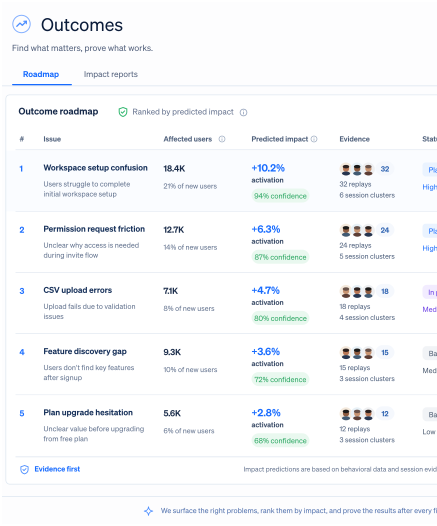
How FullSession turns a metric drop into a scoped ticket
Rank issues by impact, predict the lift before engineering starts, and prove the result after release.
Teams use FullSession to turn behavior into proven outcomes.
"FullSession shows us exactly where users get stuck without digging through hours of recordings. It’s where we start when we know there’s something wrong and needs fixed. It was easy to launch and the FullSession team is super responsive and helpful."

12x
5x

Safe for product and design workflows
Yes, and it is built for security review, not around it.Masking and blocking happenat capture, in the visitor's browser, so protected values never reach FullSession.

Mask fields, elements, or entire pages at capture, so sensitive data never reaches FullSession. Add playback masking and honor user consent or opt-out preferences.

Control access with role-based permissions, SSO/SAML, and audit logs. Customize retention and support GDPR, CCPA, and PCI requirements.

Enterprise-ready security reviews, uptime SLAs, and independently verified safeguards. Data is hosted in the US, with European residency available on request.
Multiple Integrations built in the platform because we want no resitance in your workflow

.avif)


Product management playbook.
Turn behavior, feedback, and impact into a roadmap the whole team can trust.

Frequently Asked Questions.
No. Replay, heatmaps, and funnels come from the same install.
A ticket says someone was frustrated. A session shows where, how often it recurs across the base, and what it is predicted to be worth to fix.
Yes, anyone with access opens the same replay link.
No. It ranks the opportunities and surfaces the evidence; the team decides what to build.
FullSession measures the actual result against baseline after ship, so the item closes with a number.
Stop shipping releases you cannot prove.
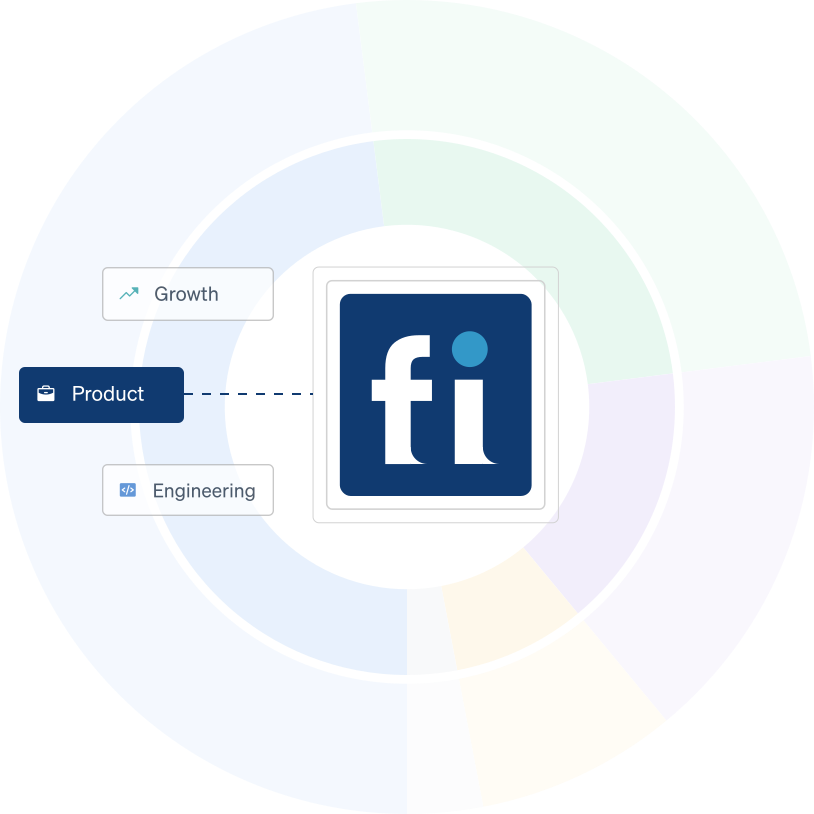
Growth sees conversion, Product sees friction, and Engineering sees the exact technical context behind it.
.svg)


.svg)
.svg)
212 E Stone Path St Derby, KS 67037 Phone: +1 415-649-4222



All systems operational.